
🔴 The Phallus Is Not Up For Debate
Sometimes the answer to "should we modernize" is just "no."
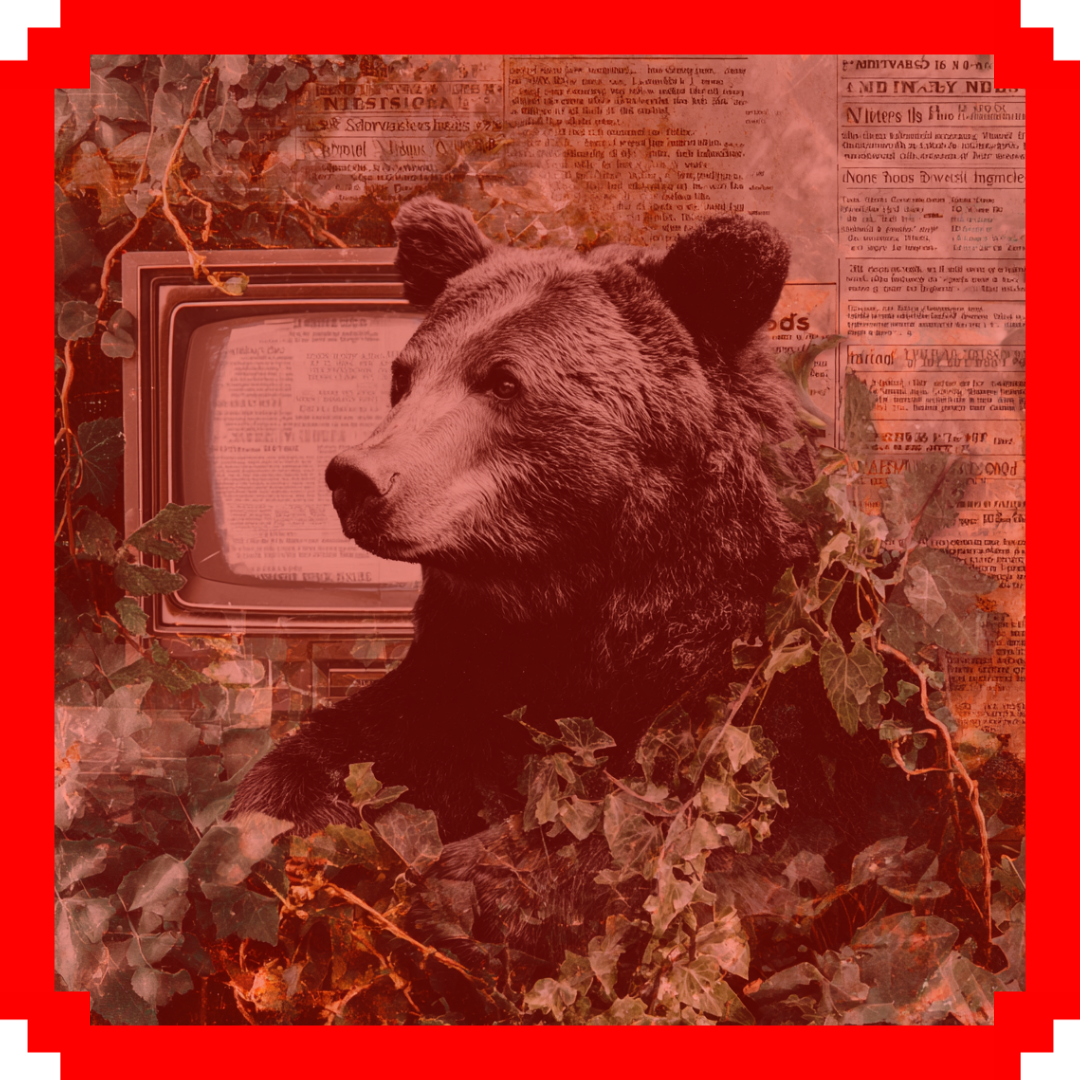
A Liberal Green parliamentarian in Bern recently submitted a written question to the cantonal government suggesting that the bear on the canton’s coat of arms, which has displayed a red phallus since at least the 15th century, should perhaps be depicted without said attribute, so that « the population as a whole would feel better represented. » He also proposed, while he was at it, flipping the bear’s direction of travel as a « symbol of progress. » The cantonal government considered both proposals. Then it said no. Then, specifically, it said it would not be conducting an online survey on the bear’s future appearance either, because such a survey « would not be representative and would have little informative value. »
Sit with that last part for a second. A government body that actively refused to crowdsource its heraldic decisions. In 2026. When everyone else is running pulse polls and stakeholder consultations and « listening exercises » before changing the font on a government letterhead. Bern looked at the logic of « let’s ask the internet » and said, essentially, that is not how we do things here. The tradition goes back 600 years, the bear has always run right-to-left on seals and early coins, and the cantonal government sees no reason to treat a symbol with six centuries of institutional continuity as a subject for a click-through survey. Is this what principled governance looks like? It might just be.
Here is the thing about Switzerland that people who don’t follow it closely tend to underestimate: the stability isn’t accidental, and it isn’t just the mountains or the CHF. It’s structural. Baked into a system where decisions are made at the lowest possible level by people who have to live with them, where tradition carries real institutional weight, where the answer to « shouldn’t we modernize this? » is sometimes a genuine and considered « no. » The EU spent years harmonizing olive oil labeling and the acceptable curvature of cucumbers (the regulation was eventually repealed, which tells you something about Brussels). Bern, meanwhile, just ruled on the heraldic integrity of a medieval bear and moved on.
(I realize this editorial is ostensibly about a coat of arms. The bear is a proxy, obviously. The actual question is: what kind of institutional culture produces this response, and is that culture investable? I think yes, which is why smart money keeps finding its way here regardless of yield, regardless of currency friction, regardless of whatever the FATF is saying this quarter.)
The bear has been running right-to-left since the 15th century. The phallus stays red. No survey was conducted. Six hundred years of uninterrupted heraldic consistency, maintained by committee vote in 2026. Bullish.
Have a great week!
M. Hantale 🧀

- 🇨🇭 Diplomacy. The Swiss government submits to Parliament the « Bilateral III » package of agreements with the EU, aimed at stabilising and strengthening relations with its main trading partner.
- 🇨🇭 Miscellaneous. The coach fire in Fribourg, which killed 6 people and injured 5, was caused by a marginal man who set himself alight, with no link to terrorism according to the prosecutor.
- 🇨🇭 Crans-Montana. The owners of the bar Le Constellation are the subject of a federal investigation on suspicion of money laundering following opaque transactions and a deadly fire.
- 🇮🇷 Trade. Iran announces it wants to maintain the closure of the Strait of Hormuz to put pressure on its adversaries, worsening the surge in oil prices.
- 🌍 Wealth. The planet now has 3,428 billionaires, a record, their combined fortune having surged to $20,100bn, driven by rising markets and the rise of artificial intelligence.
Economy & Finance
- 🇦🇪 Banking. Several major international banks are evacuating their offices in Dubai and switching to remote working following Iranian threats targeting financial interests linked to the United States and Israel.
- 🇮🇷 Economic outlook. The Middle East conflict is costing the global tourism sector $600M per day, according to the WTTC.
- 🇨🇭 Energy. The price of diesel at the pump has surged by 8.6% in Switzerland since the start of the conflict in Iran, compared with +3.7% for unleaded petrol 95.
- 🇺🇸 Inflation. Consumer prices rose 2.4% year-on-year in February, confirming stable inflation but still above the Fed’s target.
- 🇺🇸 Markets. US bond yields have surged, driven by the spike in oil prices linked to ongoing tensions in the Middle East.
- 🇫🇷 Taxation. French tax revenues surged by 7.1% in 2025 to €610bn, growing faster than GDP thanks to new taxes and the end of the price cap.
- 🇨🇭 Trade. Swiss arms exports surged by 43% in 2025, reaching 948m CHF, a record driven by European demand.
- 🇩🇪 Trade. German exports fell 2.3% in January, confirming persistent weakness in the economy at the start of 2026.
- 🇺🇸 Trade. The United States launches a trade investigation against Switzerland and other partners, citing foreign industrial overcapacity as a risk to their economy.
Switzerland
- 🇨🇭 Agriculture. Winemakers in French-speaking Switzerland are beginning the subsidised uprooting of their vines to rebalance a market in crisis, with a ban on replanting for ten years.
- 🇨🇭 Budget. The Council of States proposes reducing the Federal Office for the Environment’s funds by 64.7 million Swiss francs as part of a savings plan.
- 🇨🇭 Climate. Spring is arriving earlier and earlier in Switzerland, with hazel trees flowering two weeks before the usual date according to MeteoSwiss.
- 🇨🇭 Defence. Parliament wants to increase the pay of women in the Swiss armed forces to eliminate wage inequality with men.
- 🇨🇭 Education. Nearly half of Swiss families wish for a ban on mobile phones at school and greater support from educational institutions in dealing with social media.
- 🇨🇭 Energy. Switzerland reaffirmed its commitment to strengthening energy supply security at the international summit on civil nuclear power in Paris, as oil prices remain high.
- 🇨🇭 Energy. Switzerland is not considering releasing its oil reserves, due to the absence of a shortage, despite the appeal from the International Energy Agency.
- 🇨🇭 Health. The Federal Council proposes raising the minimum deductible for health insurance from 300 to 400 CHF, with automatic adjustment according to cost developments.
- 🇨🇭 Immigration. The Swiss Parliament supports a tightening of asylum rules, aiming to restrict family reunification and reduce the number of applications.
- 🇨🇭 Politics. The Swiss Parliament validates the principle of experiments for electronic collection of signatures on initiatives and referendums, with a pilot phase before any generalisation.
- 🇨🇭 Politics. In Geneva, the UDC and FDP propose making public subsidies conditional on the political neutrality of associations.
- 🇨🇭 Tourism. The Magic Pass seasonal pass set a record with 321,400 subscriptions sold for CHF 128m, representing a 63% increase year-on-year.
- 🇨🇭 Transport. Sales of bicycles and e-bikes fell by 7.4% in 2025 in Switzerland, with 316,050 units delivered, confirming the normalisation of the market after the Covid boom.
- 🇨🇭 Transport. Swiss Railways (CFF) transported a record 1.43M passengers in 2025, despite 20,000 construction sites on the network.
Elsewhere in the World
- 🇨🇺 Conflict. Donald Trump has revived his threat of a « friendly takeover » of Cuba, as the island faces an unprecedented energy and humanitarian crisis.
- 🇸🇩 Conflict. Two drone attacks have killed more than 55 civilians in two days in southern Sudan, as war intensifies between regular forces and paramilitary groups.
- 🇳🇬 Conflict. An attack carried out by several hundred armed men in Plateau State has caused the death of 20 members of security forces and militiamen, illustrating the persistent deterioration of the situation in Nigeria.
- 🇫🇷 Crime. A major crackdown against the DZ Mafia in Marseille has led to 26 people being charged, including 15 remanded in custody and the involvement of a lawyer suspected of corruption.
- 🇫🇷 Diplomacy. In Paris, Volodymyr Zelensky urged Iranian opposition figure Reza Pahlavi to support a « free » Iran that would cease military support for Russia in the war in Ukraine.
- 🇳🇵 Elections. The Rastriya Swatantra Party, led by former rapper Balendra Shah, won 182 of the 275 seats in Nepal’s Parliament, promising rare political stability after years of turbulence.
- 🇬🇷 Justice. The leaders of the former neo-Nazi party Golden Dawn have been sentenced on appeal to 13 years in prison for directing a criminal organisation and murder.
- 🇨🇺 Justice. Cuba announces the forthcoming release of 51 prisoners, welcoming its relations with the Vatican, whilst diplomatic tensions with the United States persist.
- 🇵🇱 Politics. President Karol Nawrocki has vetoed a European loan of €43.7bn intended for rearmament, intensifying the standoff with Donald Tusk’s government.
- 🇸🇪 Politics. Swedish Liberals have formalised an agreement with the far right, paving the way for the Sweden Democrats’ participation in the next government.
- 🇸🇪 Sanctions. A vessel on the EU’s blacklist was intercepted off the coast of Sweden whilst sailing without clear registration or flag state control.
- 🇳🇱 Security. An explosion targeting a Jewish school in Amsterdam has been described as a deliberate attack by the mayor, reigniting concerns about rising antisemitism in the Netherlands.
- 🇳🇱 Security. Four young men have been arrested in Rotterdam following an explosion and arson attack outside a synagogue, causing material damage but no injuries.
- 🇨🇳 Transport. The first passenger train in six years has crossed the Sino-Korean border, marking a partial resumption of links between China and North Korea, still closed to tourists.

- 🇺🇸 Energy. Defence Secretary Pete Hegseth claims that Iran’s closure of the Strait of Hormuz, which drove oil to $93 per barrel, should not cause lasting concern for global markets.
- 🇨🇭 M&A. Idak Food Group (Spreitenbach) finalises the acquisition of Toulouse-based Onoré (€220M), establishing itself firmly in France and the United Kingdom in the premium frozen food market.
- 🇩🇪 M&A. Migros Zurich is to sell its German subsidiary Tegut to Edeka, a consequence of deteriorating economic conditions across the Rhine.
- 🇨🇭 Technology. Infomaniak announces plans to accelerate in European cloud, facing the persistent dominance of American giants AWS, Microsoft and Google.
- 🇨🇭 Technology. Zurich-based startup Seprify raises €13.4m to industrialise a cellulose-based alternative to titanium dioxide, with support from IKEA.
SMI Index
| Name | Price | Mkt Cap | 7d Chg | YTD |
|---|---|---|---|---|
| Roche | 320.50 | 255.00B | ▼ -0.63% | ▲ +1.48% |
| Novartis | 121.32 | 231.50B | ▼ -0.23% | ▲ +15.22% |
| Nestlé | 80.97 | 208.27B | ▲ +1.15% | ▲ +5.93% |
| ABB | 66.30 | 120.45B | ▲ +1.56% | ▲ +8.26% |
| UBS | 29.21 | 90.31B | ▼ -1.38% | ▼ -23.47% |
| Zurich Insurance | 540.80 | 80.78B | ▲ +2.11% | ▼ -9.81% |
| Swiss Re | 129.15 | 37.98B | ▲ +0.94% | ▼ -0.77% |
| Swisscom | 720.00 | 37.30B | ▼ -0.62% | ▲ +24.35% |
| Holcim | 62.88 | 34.78B | ▼ -1.57% | ▼ -19.53% |
| Lonza | 480.60 | 33.71B | ▼ -3.63% | ▼ -10.27% |
| Alcon | 60.50 | 29.49B | ▼ -3.51% | ▼ -4.78% |
| Givaudan | 2,802.00 | 25.86B | ▼ -1.89% | ▼ -9.79% |
| Swiss Life | 813.80 | 23.22B | ▼ -1.71% | ▼ -12.70% |
| Sika | 133.95 | 21.49B | ▼ -3.32% | ▼ -18.17% |
| Partners Group | 812.60 | 21.08B | ▲ +0.07% | ▼ -21.11% |
| Geberit | 555.80 | 18.32B | ▼ -2.04% | ▼ -9.77% |
| SGS | 89.56 | 17.30B | ▼ -2.40% | ▼ -3.70% |
| Straumann | 81.04 | 12.92B | ▼ -3.13% | ▼ -14.06% |
| Julius Bär | 59.32 | 12.15B | ▼ -3.58% | ▼ -9.82% |
| Logitech | 73.74 | 10.83B | ▲ +3.48% | ▼ -7.22% |
📅 Data as of 2026-03-16 09:28
Forex CHF
| Pair | Rate | 7d Chg | YTD |
|---|---|---|---|
| EUR/CHF | 0.90 | ▲ +0.43% | ▼ -2.86% |
| USD/CHF | 0.79 | ▲ +1.13% | ▼ -0.25% |
| GBP/CHF | 1.05 | ▲ +0.74% | ▼ -1.91% |
📅 Data as of 2026-03-16 09:28

Switzerland’s Long Game
Here’s what everyone gets wrong about Switzerland and the EU: this is not a story about a small country capitulating to a large one. It is a story about a country that said no in 2021, absorbed three years of friction, and came back to the table with a deal it could defend. The Federal Council adopted the Bilaterals III package on March 13 and sent it to parliament. Formally, a procedural step. Actually, the conclusion of a negotiation that Brussels had spent years doubting would ever happen.
The numbers explain why it had to. Over CHF1B in goods and services cross the Swiss border every single day. 60% of merchandise trade flows toward EU markets. Fifteen cantons share a border with an EU member state. These are not arguments for integration. They are descriptions of a reality that already exists, with or without legal architecture. The Bilaterals don’t create Switzerland’s dependence on the EU. They simply acknowledge it, and manage it.
The SVP, the largest party in the country and the loudest opponent of the package, wants a double majority vote, cantons plus people. The Federal Council is holding to a simple popular majority, which is what the Constitution prescribes. This is now the actual battlefield, not the substance of the agreements. Three new laws, 36 amended ones, covering health, food safety, and electricity. The SVP has read the math. A double majority is harder to clear. Should that surprise anyone. Same playbook as 2021, when the framework agreement died not from a vote but from a unilateral Swiss walkout.
What tends to get lost, particularly for observers used to EU negotiations going badly, is how different this dynamic actually is. Brussels negotiates with Washington and gets tariffs. It negotiates with Beijing and gets technology transfer disputes and market access complaints dressed up as trade talks. It negotiates with Switzerland and gets a relationship that has quietly underpinned one of the world’s most productive economies for twenty-five years. The bilateral system is not Brussels winning. It is not Bern losing. It is a structure that functions precisely because neither side can afford for it not to.
The geopolitical moment adds urgency. Europe is rearranging itself: defense spending up, trade assumptions broken, Washington less predictable and less interested in the multilateral architecture that suited Switzerland well. In that context, locking in a stable legal framework with the continent’s largest economic bloc is not concession. It is risk management. The Mouvement européen Suisse is pushing for a popular vote in 2027, before federal elections. The calendar is tight and Bern insiders are skeptical. But the logic holds: in a period of maximum external volatility, Switzerland is doing what it does, securing its position methodically, without posturing, without spectacle.
That is the point. Pragmatism does not generate headlines. It generates GDP.